Why Decision Systems Break within an AI-Accelerated World
Across organizations and institutions, failure is rarely an execution problem. It is a breakdown of signal, trust, and coordination under speed and complexity.
The Problem We Study
As AI accelerates information flow and compresses decision time, traditional leadership and management models fail to keep pace. Signals arrive faster than they can be interpreted. Trust degrades across Human | AI boundaries. Coordination costs rise as systems fragment.
Our Focus
We study these breakdowns and develop models for how complex Human | AI systems detect disruption, interpret risk, and recover coherent action under pressure.
This work is led by scaleWorks!
What breaks in complex decision systems?
Observed Failure Patterns
Trust is not a trait — it is a behavior
Our work is grounded in TrustFlow Intelligence™ … a system-level lens for understanding how trust, signal, and coordination behave in complex Human | AI environments.
what becomes possible when signal is restored and decision systems regain coherence:
Organizations move faster without destabilizing
Decisions improve without centralization
Costs fall as coordination friction decreases
applied enagagements
Organizations and institutions engage with scaleWorks through advisory and research-led engagements where decision integrity, trust, and coordination are at risk.
Conversations typically begin when the system — not the strategy — starts to fail.
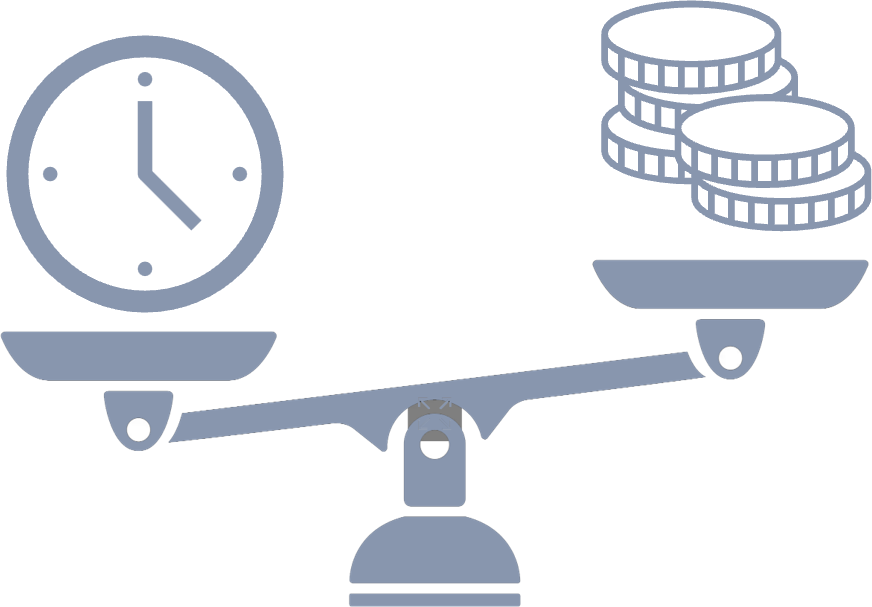
COORDINATION COST vs. OPERATIONAL EFFICIENCY: Costs increase when coordination friction rises – through rework, misaligned handoffs, duplicated decisions, and reactive risk management layered on top of uncertainty.
APPLIED IMPLICATION: When coordination friction increases, costs fall naturally through reduced rework, fewer escalations, and more stable execution under change.
REACTIVE SPEED vs. COHERENT RESPONSE: When decision signal degrades, faster action amplifies error rather than reducing risk. What appears as slowness is often a system protecting itself from incomplete or distorted information.
APPLIED IMPLICATION: When decision signal is restored, systems respond faster without volatility, escalation, or loss of control.
DECISION QUALITY vs. DECISION CONFIDENCE: What appears as poor judgement is often the result of degraded trust, fragmented interpretation, and distorted feedback loops. In Human | AI systems, confidence can increase even as decision quality declines.
APPLIED IMPLICATION: When trust and signal integrity are restored, decision quality improves without escalation, centralization, or control-heavy governance.